
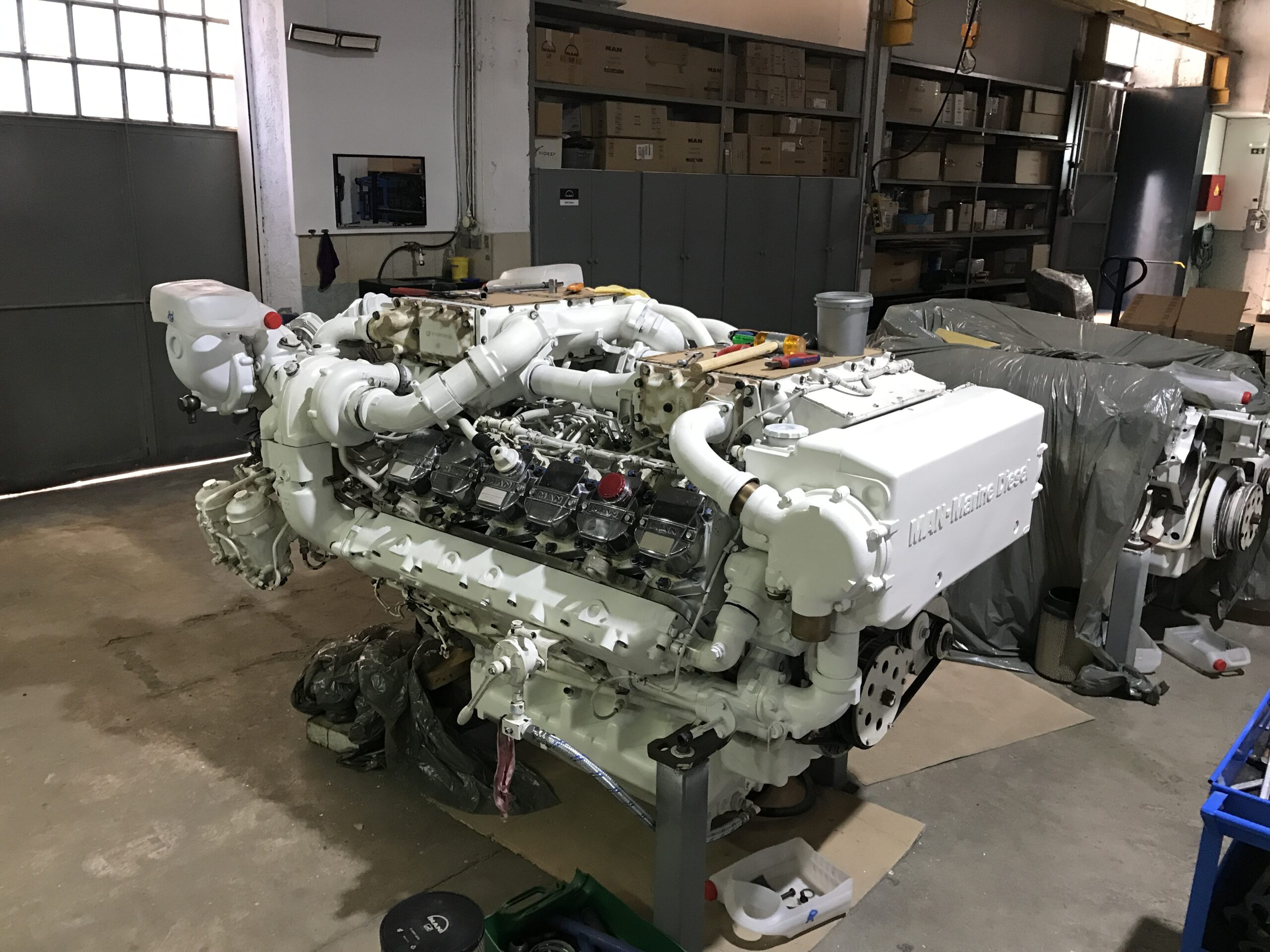
What can cause a MAN Marine Engine to overheat?
Overheating is an important warning sign that should never be ignored on a marine engine. A MAN Marine Engine relies on a properly functioning cooling system to maintain the correct operating temperature under different loads and operating conditions.
When the cooling system cannot remove enough heat from the engine, the operating temperature can rise above the recommended level. This may be caused by restricted water flow, problems with the cooling system, insufficient coolant, a damaged component or other mechanical issues.
Early identification of the problem can help prevent further damage and reduce the risk of an unexpected breakdown while the vessel is operating. Even a relatively small cooling-system fault can become more serious if the engine continues to operate under excessive temperature for an extended period.
Because marine engines often operate under significant and continuously changing loads, the cooling system must remain in good working condition. A temperature increase should therefore be investigated rather than treated simply as a temporary fluctuation.
Common causes of MAN Marine Engine overheating
Several different components and systems can contribute to an overheating problem. The most common causes include:
| Possible cause | What may happen |
|---|---|
| Restricted cooling water flow | Insufficient cooling can cause engine temperature to increase. |
| Blocked seawater intake | Reduced seawater flow can affect the cooling system. |
| Impeller or water pump problem | The required water circulation may not be achieved. |
| Blocked heat exchanger | Heat transfer efficiency can be reduced. |
| Low coolant level | The cooling circuit may not operate correctly. |
| Thermostat problem | The engine may not regulate its operating temperature correctly. |
| Cooling system leaks | Loss of coolant can affect engine temperature. |
| Sensor or monitoring problem | Incorrect temperature information may be displayed. |
In some cases, more than one factor may contribute to the overheating condition. For example, reduced seawater flow combined with contamination inside a heat exchanger can significantly reduce cooling performance. For this reason, a complete inspection is often more useful than checking only one component.
Signs that a MAN Marine Engine may be overheating
An overheating problem may appear through several warning signs. Depending on the engine model and the nature of the fault, the symptoms can include:
| Warning sign | What it may indicate |
|---|---|
| Higher than normal temperature | The cooling system may not be removing enough heat. |
| Temperature warning alarm | The engine monitoring system has detected an abnormal condition. |
| Reduced cooling water flow | A restriction, pump or seawater system problem may exist. |
| Steam or unusual heat | A cooling system problem may require immediate inspection. |
| Loss of engine performance | The engine may reduce performance as temperature increases. |
| Unusual noises or smells | A component may require inspection. |
The appearance of one or more of these symptoms does not necessarily identify the exact source of the problem. Temperature sensors, alarms and other monitoring systems provide important information, but the underlying cause should be confirmed through appropriate technical inspection.
Cooling system inspection
The cooling system is one of the most important areas to inspect when investigating engine overheating. A MAN Marine Engine may use several components to control and transfer heat, and each component must operate correctly.
Inspection may include the coolant level, hoses, connections, pumps, thermostats, heat exchangers and other components according to the specific engine model and the manufacturer's maintenance requirements.
The seawater side of the cooling system should also be checked. Restrictions at the seawater intake, damaged components or reduced water flow can affect the engine's ability to maintain the correct operating temperature.
Particular attention should also be given to signs of corrosion, contamination, deposits or deterioration of components. The condition of the cooling circuit can change over time, especially when the engine operates frequently in a marine environment.
Why regular maintenance helps prevent overheating
Preventive maintenance can help identify cooling-system problems before they develop into a more serious engine issue. Following the manufacturer's recommended maintenance intervals is particularly important for marine engines that operate under demanding conditions.
Regular inspections can help identify worn components, contamination, leaks, restricted passages and other conditions that may affect cooling performance.
Using the correct lubricants, filters, coolants and genuine or manufacturer-approved replacement parts is also important when carrying out maintenance.
Maintenance should not only be performed after an overheating incident. Routine inspection of the cooling system can help identify deterioration before it affects engine operation, supporting more reliable vessel operation and helping reduce the possibility of unexpected downtime.
What should you do if your MAN Marine Engine overheats?
If the engine temperature rises abnormally or a temperature warning appears, the engine should be handled according to the manufacturer's operating and safety instructions. Continuing to operate an engine under abnormal temperature conditions may increase the risk of damage.
The cause of the overheating should be identified before the engine returns to normal operation. Depending on the circumstances, professional inspection may be required to determine whether the problem is related to the cooling system, monitoring equipment, lubrication system or another engine component.
It is also important not to assume that adding coolant or restarting the engine has resolved the underlying issue. If there is a leak, restricted water flow, pump problem or another mechanical fault, the condition may return once the engine is placed under load again.
Why use genuine MAN spare parts?
Marine engines operate in demanding environments where reliability is particularly important. Replacement components should therefore be selected according to the exact engine model and manufacturer's specifications.
Genuine MAN spare parts or appropriate manufacturer-approved components can help ensure compatibility with the engine and its maintenance requirements.
At B.K. Marine, the correct engine information can be used to identify the appropriate components and maintenance requirements for your MAN Marine Engine.
MAN Marine Engine overheating inspection by B.K. Marine
B.K. Marine provides technical support and service for MAN marine engines, including inspection and maintenance of systems that can affect engine temperature and reliability.
If you notice an abnormal temperature indication, warning alarm, reduced cooling-water flow or another unusual symptom, contact B.K. Marine so that the condition can be assessed and the appropriate service procedure can be determined.
A detailed inspection can help identify whether the issue is related to the seawater circuit, coolant circuit, heat exchanger, pump, thermostat, sensor or another component. Identifying the actual cause is important before replacing parts or returning the engine to normal operation.
Frequently Asked Questions
Why does a MAN Marine Engine overheat?
Overheating can have several causes, including restricted cooling-water flow, problems with the seawater intake, insufficient coolant, a water pump or thermostat problem, a blocked heat exchanger or another cooling-system fault. The exact cause should be determined through appropriate inspection.
Can low coolant cause engine overheating?
Yes. An insufficient coolant level can affect the operation of the cooling circuit and may contribute to increased engine temperature. The reason for a low coolant level should also be investigated because it may indicate a leak or another problem.
What should I do when the engine temperature rises?
Follow the manufacturer's operating and safety instructions and avoid continuing operation under abnormal conditions. The engine should be inspected to determine the cause before normal operation is resumed.
How can overheating problems be prevented?
Following the recommended maintenance schedule, inspecting the cooling system, maintaining correct fluid levels and using the correct replacement parts can help reduce the risk of cooling-system problems and overheating.
Can a blocked heat exchanger cause overheating?
Yes. Deposits, contamination or other restrictions inside a heat exchanger can reduce heat-transfer efficiency and affect the cooling system's ability to remove heat from the engine. If overheating is observed, the heat exchanger should be inspected together with the other cooling-system components.
How often should the cooling system of a MAN Marine Engine be inspected?
The inspection and maintenance intervals depend on the specific MAN Marine Engine model, operating conditions and manufacturer's recommendations. Regular checks as part of scheduled maintenance can help identify leaks, worn components, restrictions and other issues before they affect engine operation.
Conclusion
MAN Marine Engine overheating can have different causes, from restricted cooling-water flow and low coolant levels to problems with pumps, thermostats, heat exchangers or monitoring components. Recognising the warning signs early and investigating the source of the problem can help prevent further engine problems.
Regular preventive maintenance, appropriate inspections and the use of correct replacement components are important parts of maintaining reliable engine operation. When an abnormal temperature or warning alarm occurs, the condition should be assessed according to the manufacturer's instructions before the engine is returned to normal service.
B.K. Marine can assist with the inspection, maintenance and technical support required for MAN marine engines, helping identify potential cooling-system problems and determine the appropriate service procedure for each engine.